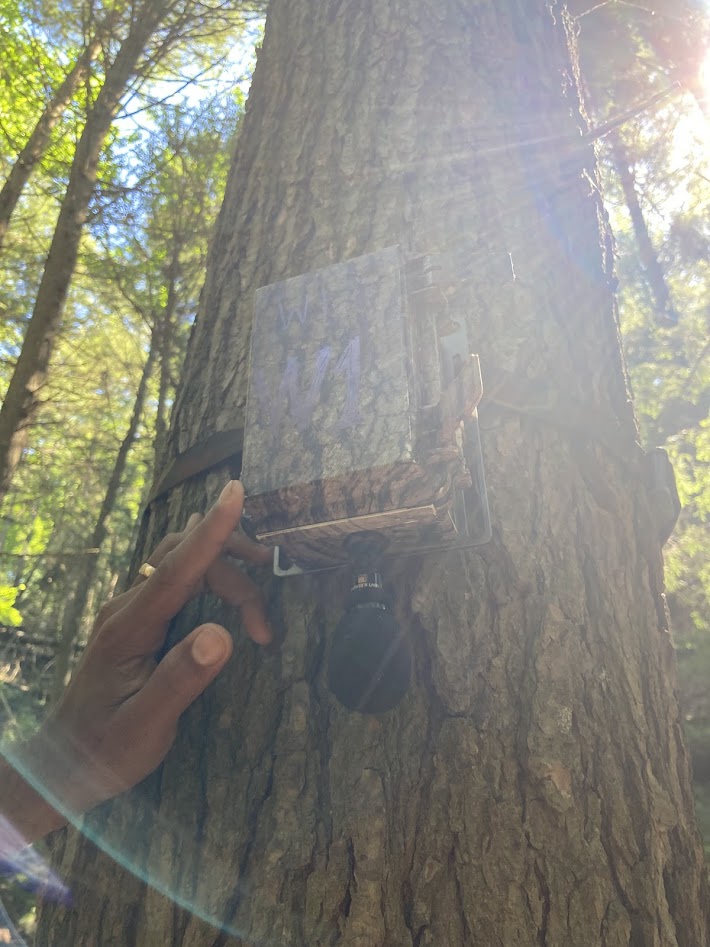
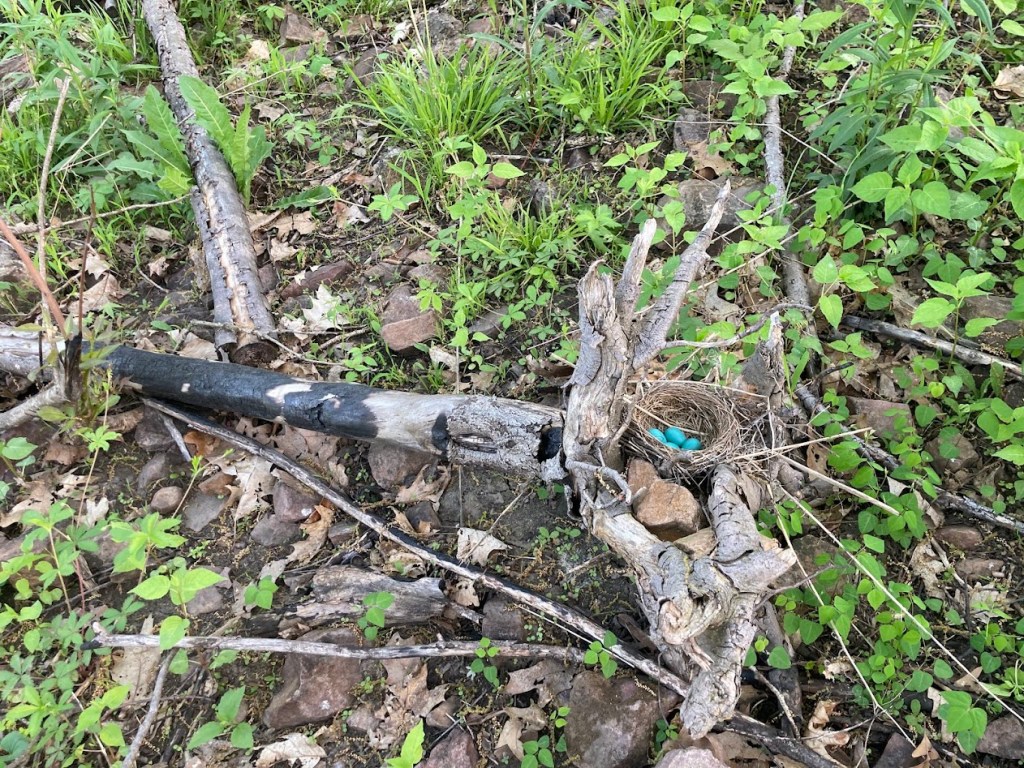
How does oak woodland management influence the soundscape, or the total collection of sounds in a habitat throughout the day or year? During 2022, we conducted research across managed and unmanaged oak woodland sites in the Baraboo Hills to understand how tree thinning and prescribed fire can influence biodiversity, and thus soundscapes. This research was conducted as part of Maia‘s PhD at UW-Madison, under the mentorship of Dr. Anna Pidgeon and Dr. Zuzana Burivalova, with Sagara as a co-author. The majority of study sites were owned and managed by The Nature Conservancy.
We focused on two indices, or ways of summarizing soundscapes: Soundscape Saturation and Acoustic Complexity Index. Soundscape Saturation tells us how ‘full’ each frequency or pitch of the soundscape is of biological sounds at any given time – or in other words, are all of the vocalizing species that evolved together in an ecosystem still present? If a soundscape is highly saturated, then this is likely true, but if it has ‘gaps’ and thus is less saturated, then species could be missing from that habitat. Acoustic Complexity Index was developed for studying birds, and in general, more complex soundscapes (i.e., containing many unique pitches and patterns) are associated with more bird abundance and diversity.
In the Baraboo Hills, we found that soundscapes in managed oak woodlands tend to be more saturated and complex, especially during the dawn chorus, and during the heart of bird nesting season – late May and June. By doing bird surveys in these same sites we found greater species richness of birds in managed sites as well.
You can learn more about this research, and how it connects to The Nature Conservancy’s land stewardship, in a webinar hosted by the Oak Woodlands and Forests Fire Consortium, or an interview in The Nature Conservancy Magazine.
This research was published in Oecologia, and a full PDF is available below. To learn more about our ongoing bioacoustic research in the Baraboo Hills, check out the Soundscape Baselines Project.
Click here to make a donation!
 Baraboo Hills Ecology Research Collective