
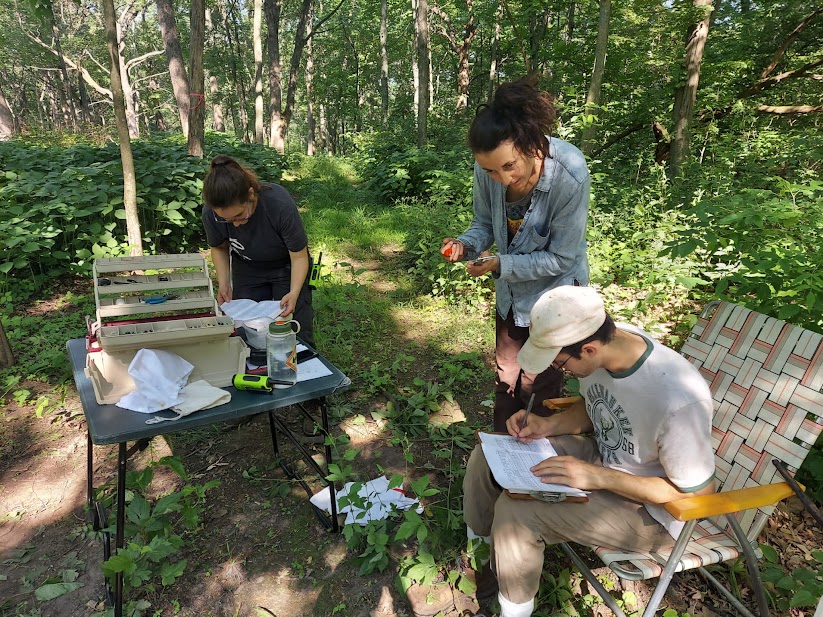
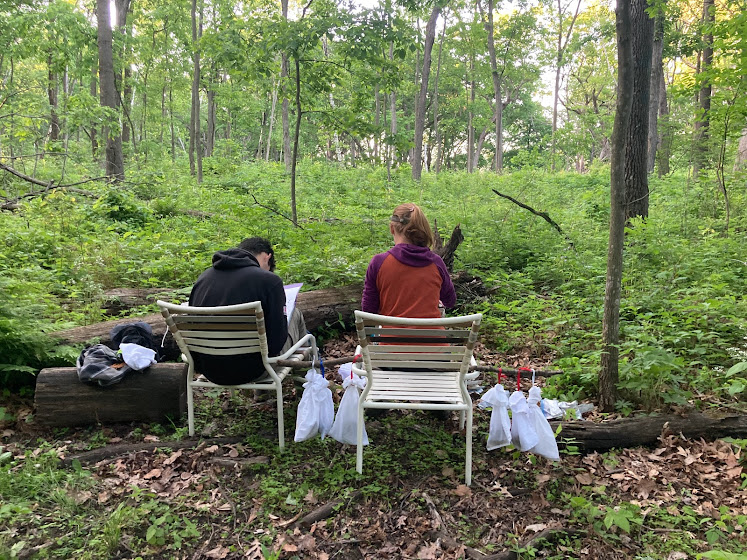
We operate five bird banding stations during the spring and summer, following MAPS protocols (Measuring Avian Productivity and Survivorship) and joining a network of banding stations coordinated by the Institute for Bird Populations. This protocol ensures that safe and ethical practices will be followed to minimize stress to the birds. USGS Bird Banding Laboratory permit #24298.
In 2025, we completed our fifth MAPS bird banding season, and submitted several hundred bird records to the Institute for Bird Populations. While it’s important to contribute to continent-wide monitoring efforts, we were also encouraged to see detailed information about the bird communities at each of our banding sites begin to take shape.
Collecting demographic information on bird species gives us a window into population changes over time. We can also use MAPS banding data to study individual bird health, and to identify which part of the annual cycle might be driving species declines. For example, finding that only a few individuals return from migration each spring points to threats on the wintering grounds or migration routes, while encountering low numbers of fledging birds in late summer indicates poor nesting success. For rare species, it will take years to compile enough data to estimate population vital rates, but for the more common bird species, we expect to reach this point soon.
To see how we are using bird banding data so far, check out our study examining the response of the avian insectivore community to woodland management.
Hemlock Draw Uplands: This site was established in 2021 within one of The Nature Conservancy’s woodland restoration sites. Characterized by a steep south-facing sandstone bluff, mature white and red oak trees, and a recovering herbaceous ground layer, this site is approaching open woodland conditions after decades of fire suppression. The most abundant bird species encountered during MAPS operations are Indigo Bunting, Eastern Wood-Pewee, and American Redstart, and a total of 27 bird species have been banded, indicating that bird diversity is higher here than any of our other sites.
This site also has the record for the oldest individual bird in our study area – a Mourning Warbler, banded in the site as an adult (at least two years old) in 2021 and recaptured in 2025. For a 13 gram bird which migrates to Central or South America each year, surviving for six years is impressive! The oldest Mourning Warbler ever recorded was seven years old.

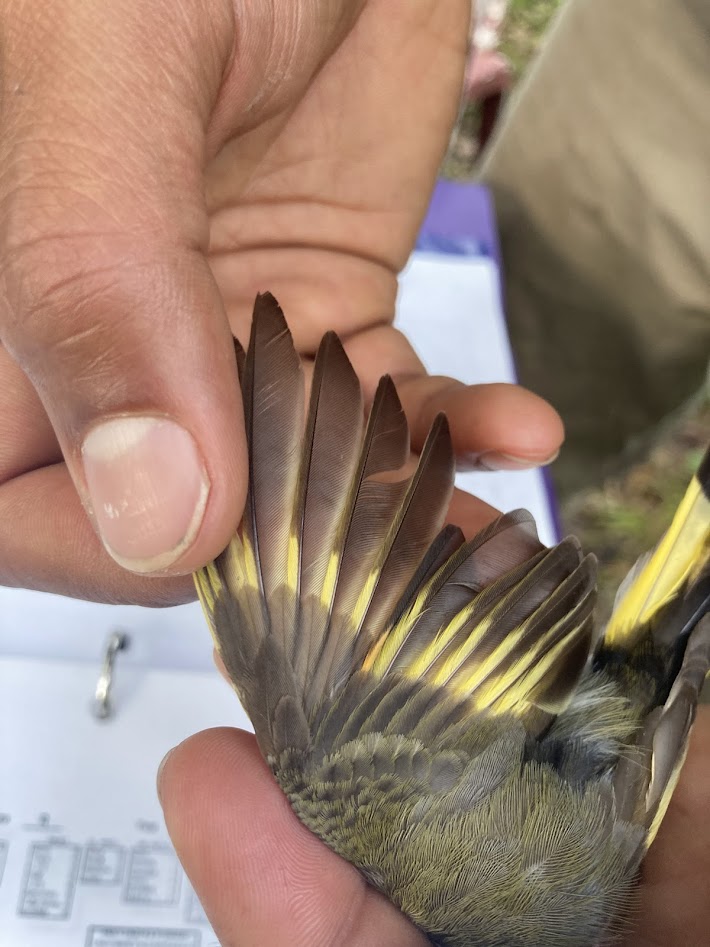
Happy Hill Woodland: Another site located within a large oak woodland managed by The Nature Conservancy, the Happy Hill Woodland banding site was established in 2021. Located within Baxter’s Hollow Preserve, one of the most extensive forests in southern Wisconsin, this site is at the top of a flat quartzite blufftop in an oak-hickory woodland. The most abundant birds banded here are American Redstart, Rose-breasted Grosbeak, and Eastern Wood-Pewee, and 26 species have been banded to date.
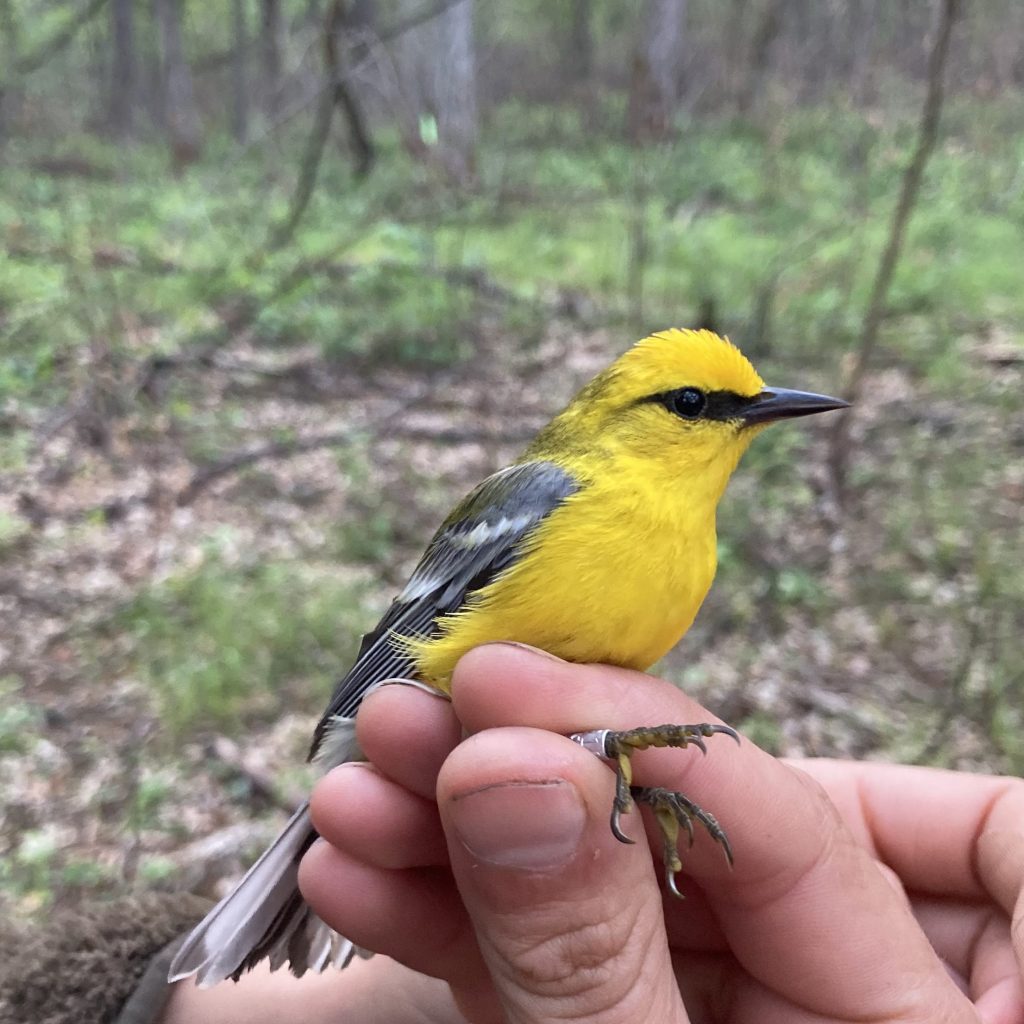
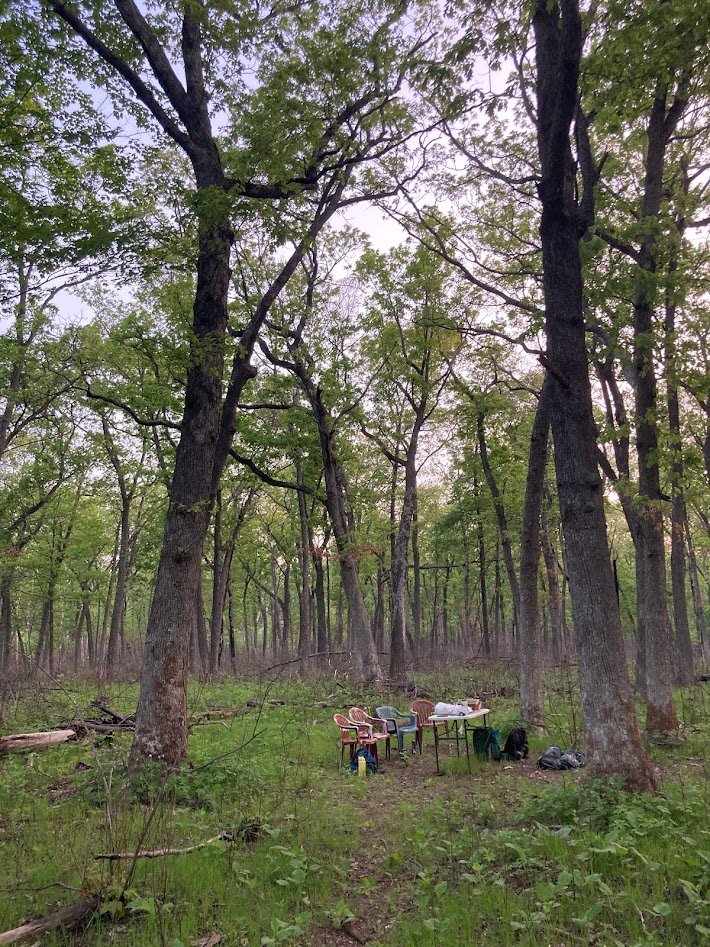
Natural Bridge Uplands: This site was operated in 2022 and 2023, and is located at the top of a steep sandstone bluff within Natural Bridge State Park, owned and managed by the Wisconsin Department of Natural Resources. Mature oak trees are dominant in the canopy, however years of fire suppression have resulted in dense midstory and shrub-layer conditions. The most abundant birds encountered were Ovenbird, Downy Woodpecker, and Rose-breasted Grosbeak, and in total, 22 species were banded.
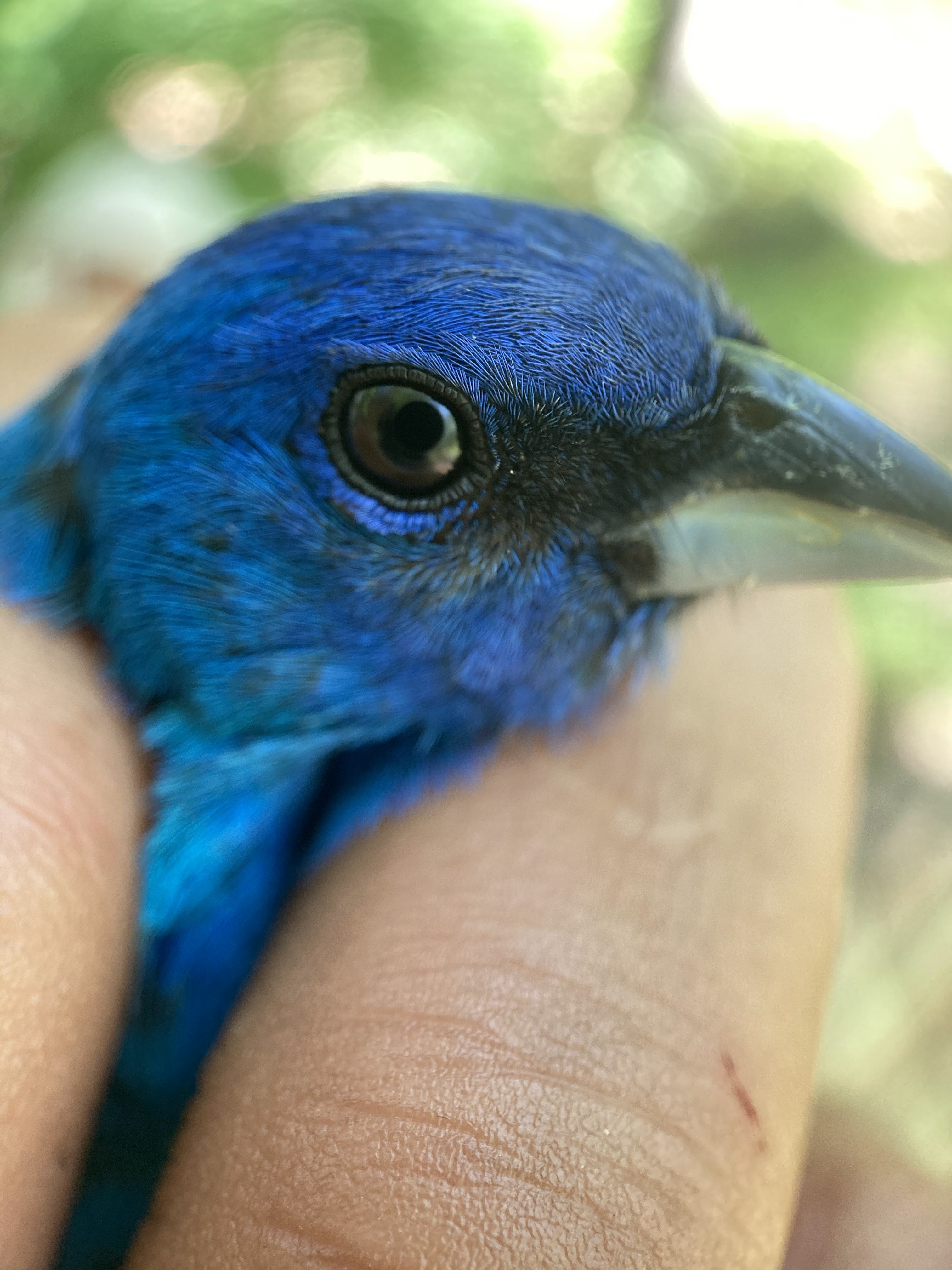
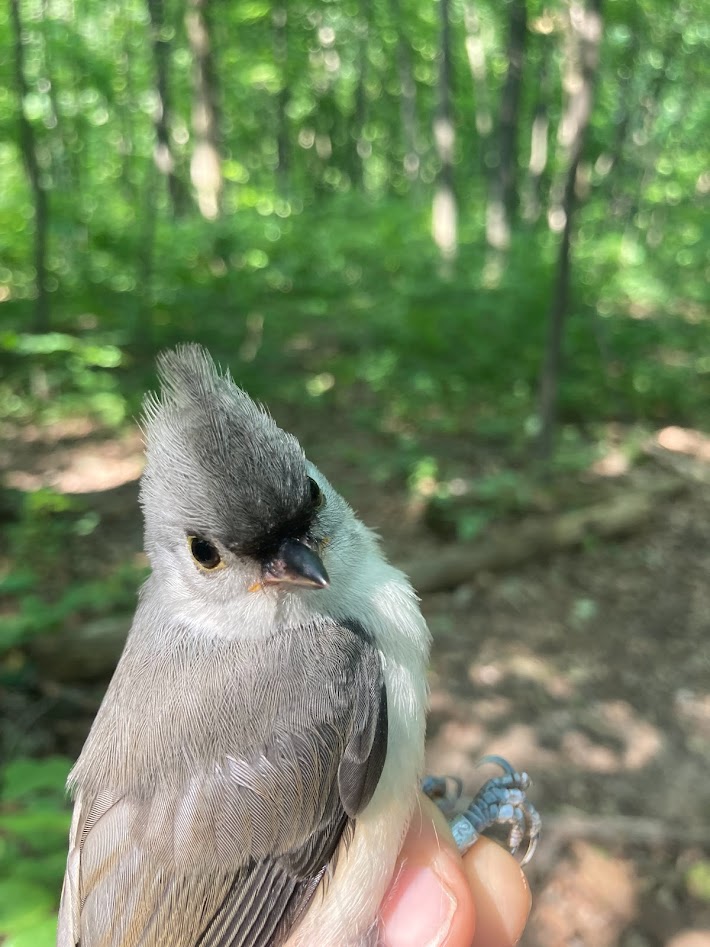
Pan Hollow Uplands: This site, owned and managed by The Nature Conservancy, is part of an extensive forest preserve extending across a wide stream valley to uplands on either side. The current Pan Hollow Uplands banding site was established in 2022, and is on the top and south slope of a quartzite bluff above a quartzite outcropping. Oaks, hickories, and maples are common in the overstory, and the midstory has become dense due to regeneration of maples and other shade-intolerant species. The ground layer is predominantly leaf-litter and maple seedlings with some shrub growth near tree-fall gaps and one remnant oak opening. The most abundant birds encountered are Wood Thrush, Ovenbird, and Veery, and 21 bird species have been banded.
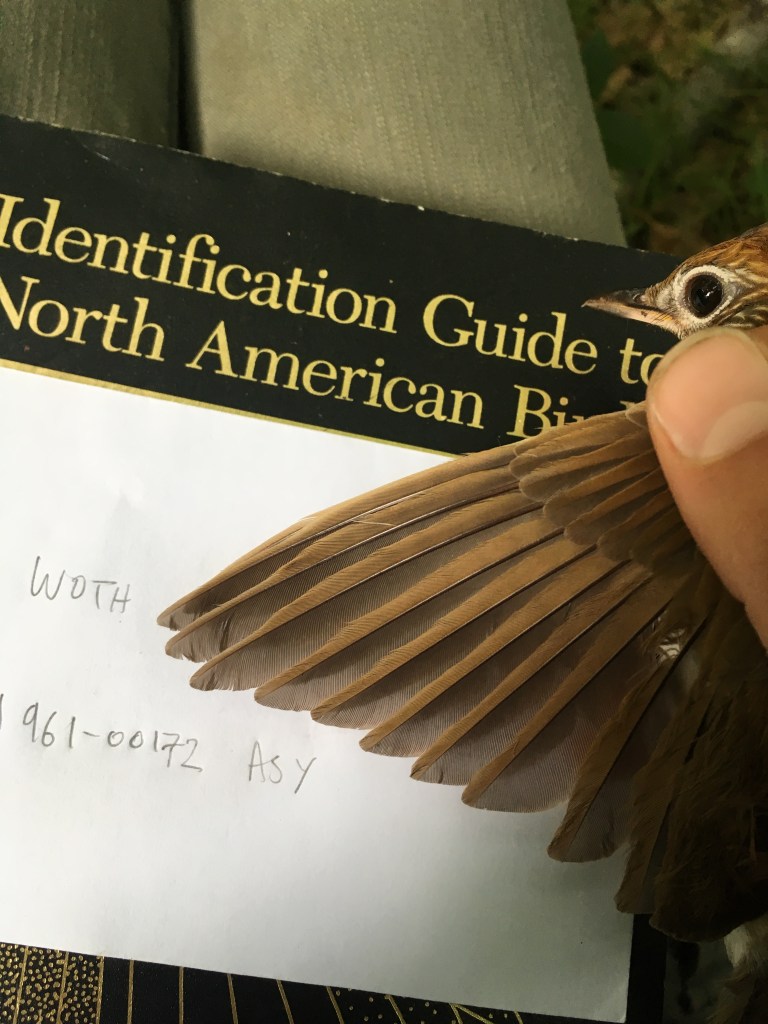
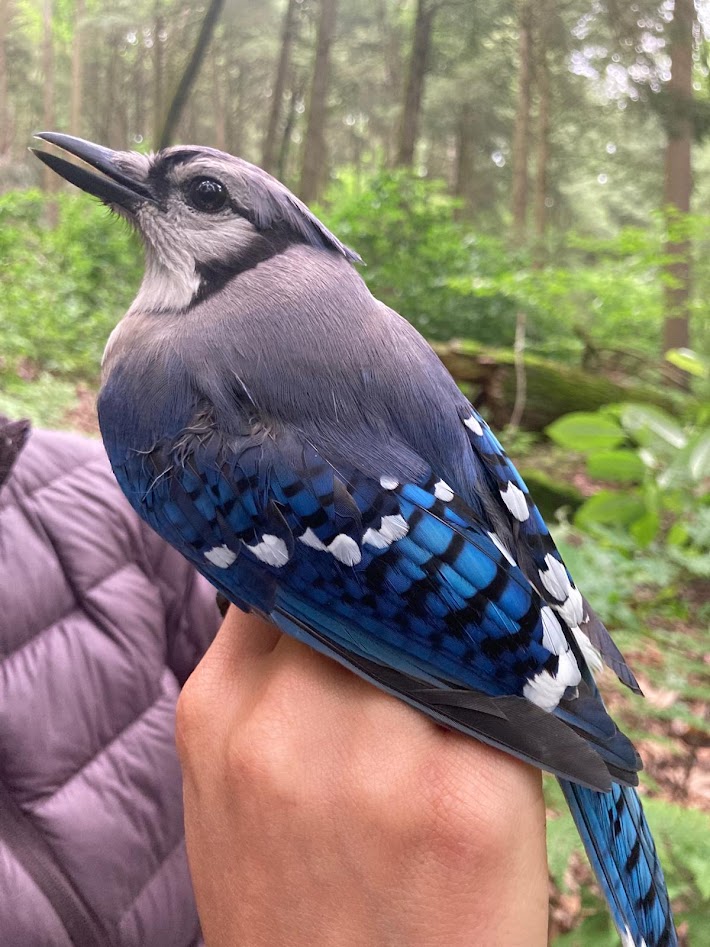
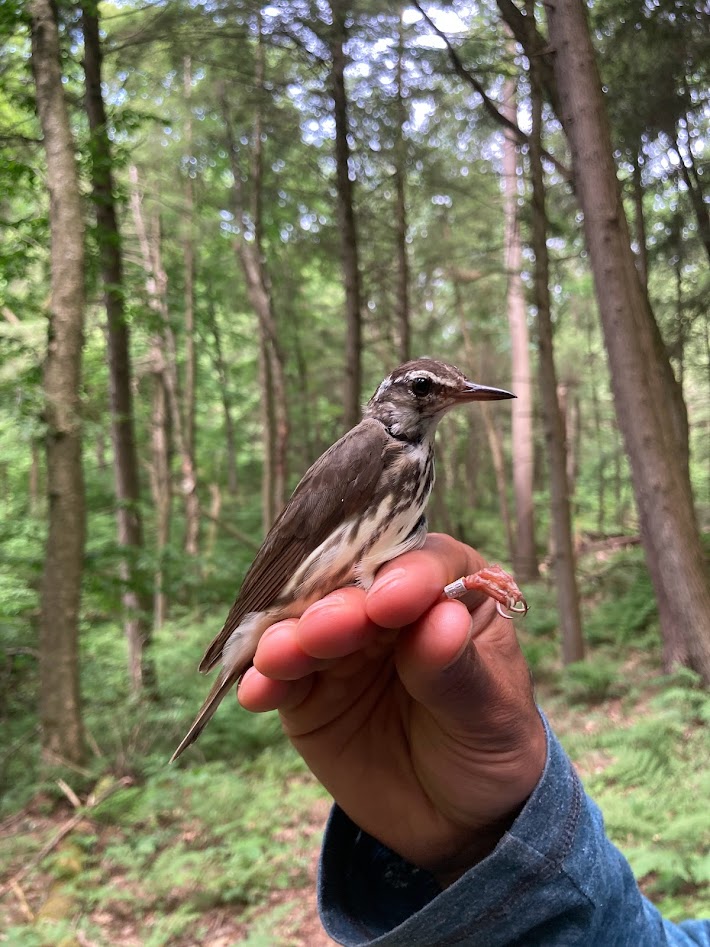
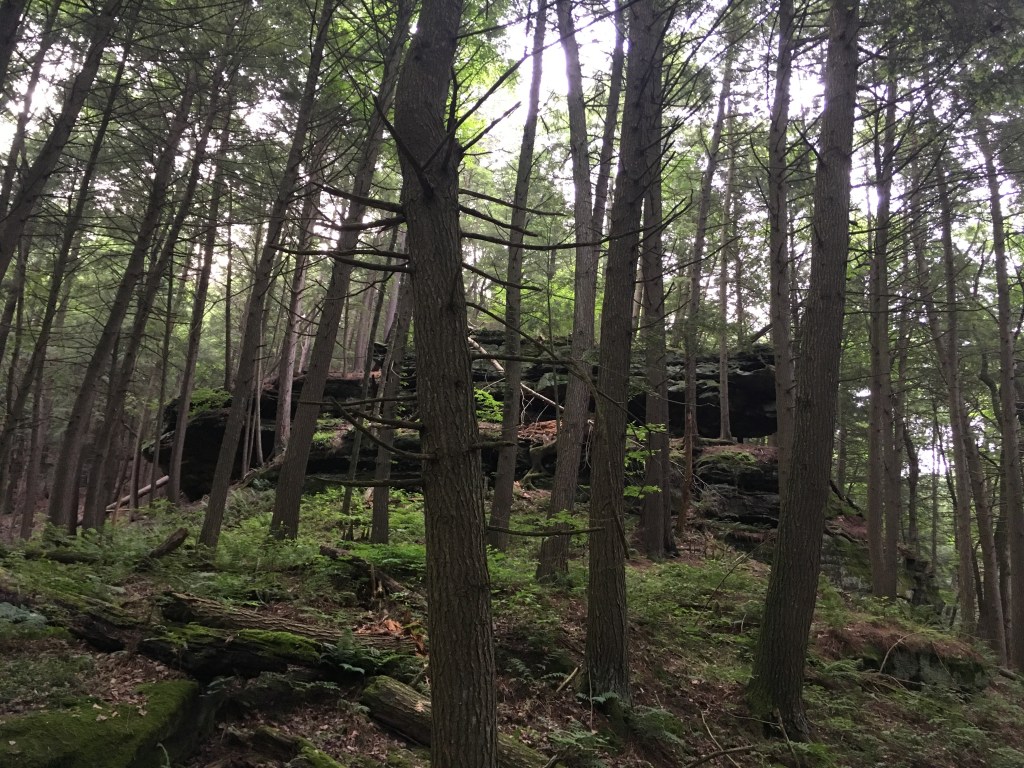
Pine Hollow: This site was established in 2021 within a stream gorge forest characterized by hemlock, sugar maple, white pine, and basswood. This is a unique site in that our nets are located along a stream and so are ideal for studying Louisiana Waterthrush populations. This has been consistently the most abundant species at this site, followed by Acadian Flycatcher. Only 13 species have been banded at this more specialized site, but several are species of high conservation concern in this landscape.
Click here to make a donation!
 Baraboo Hills Ecology Research Collective