Bird Ecology
The Baraboo Hills provide habitat for a unique assemblage of species, including birds which depend on interior forest habitat, birds at the southern edge of their range, and birds with northward expanding ranges that are relatively new to southern Wisconsin. Interior forest habitat, free of hard edges, housing development, and roads, is rare in the Midwest. Through the dedication of generations of conservationists, we are able to study bird ecology within several thousand acres of connected protected areas.

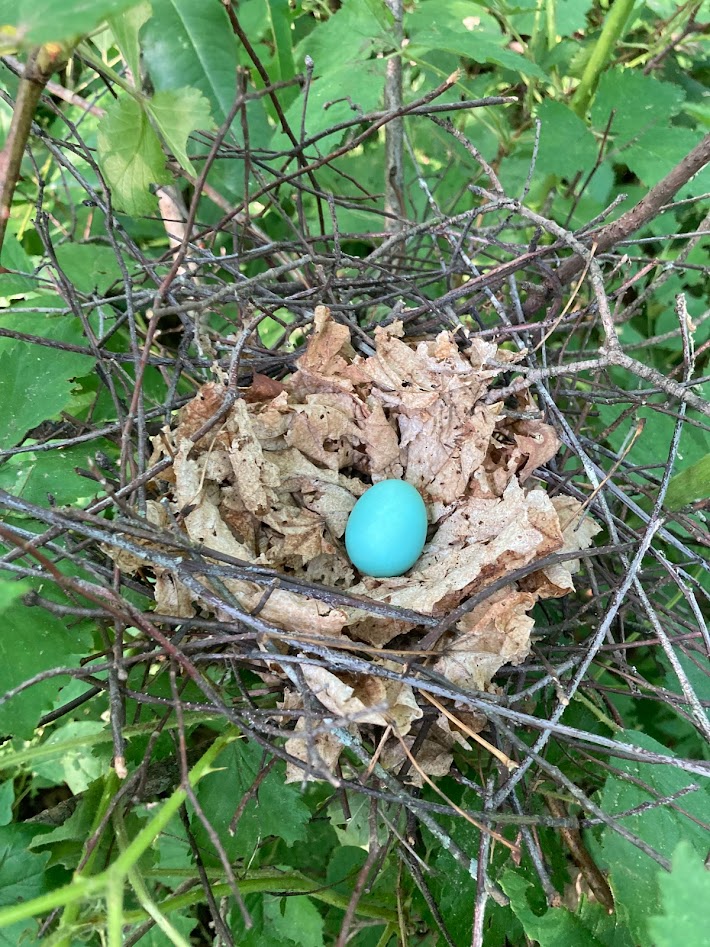
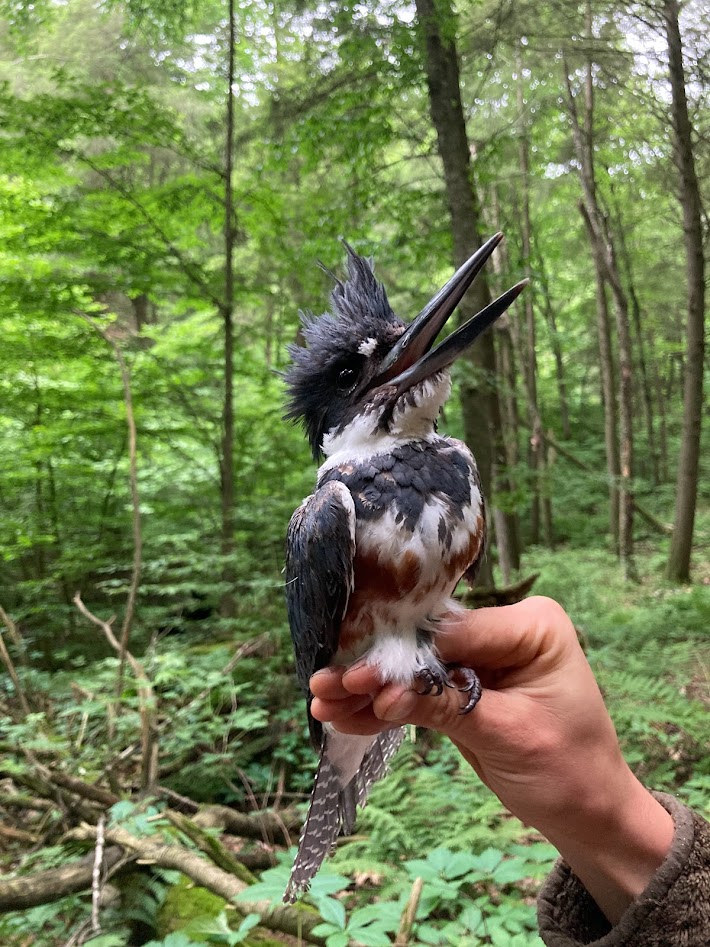
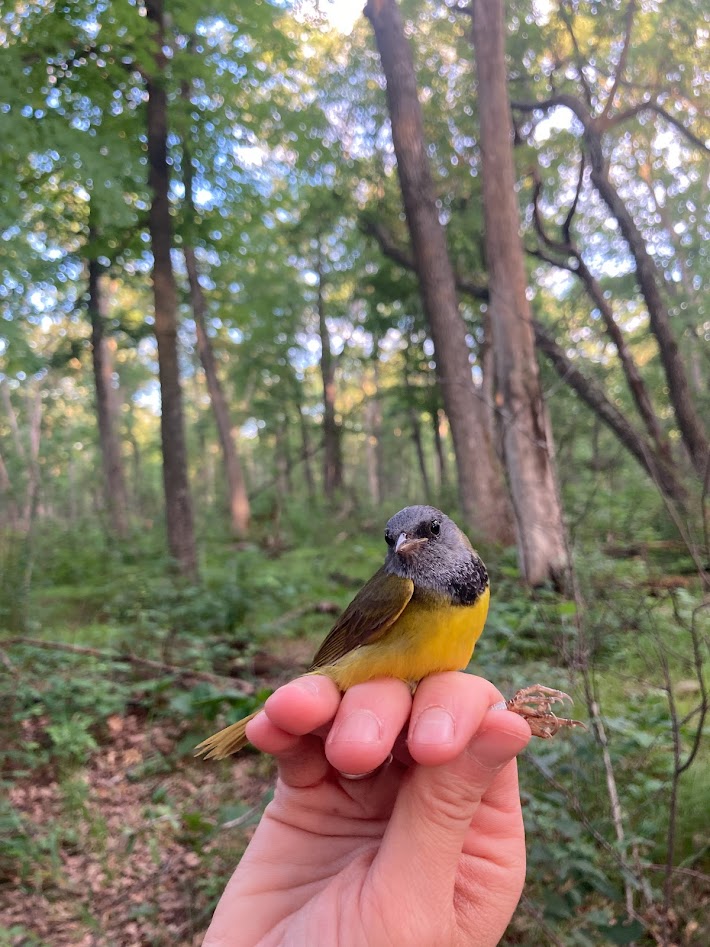
We study bird population dynamics in managed and unmanaged oak woodland sites, as well as in stream gorge habitats through a combinations of bird surveys and bird banding. Read about our long-term bird banding stations here, and about what makes forest habitat resilient for insectivorous birds here.
Check out our recently published work about how the insectivorous bird community is responding to woodland management! We have recently examined avian insectivore community dynamics as well as the response of common forest bird species to woodland management in the Baraboo Hills.
Bioacoustics
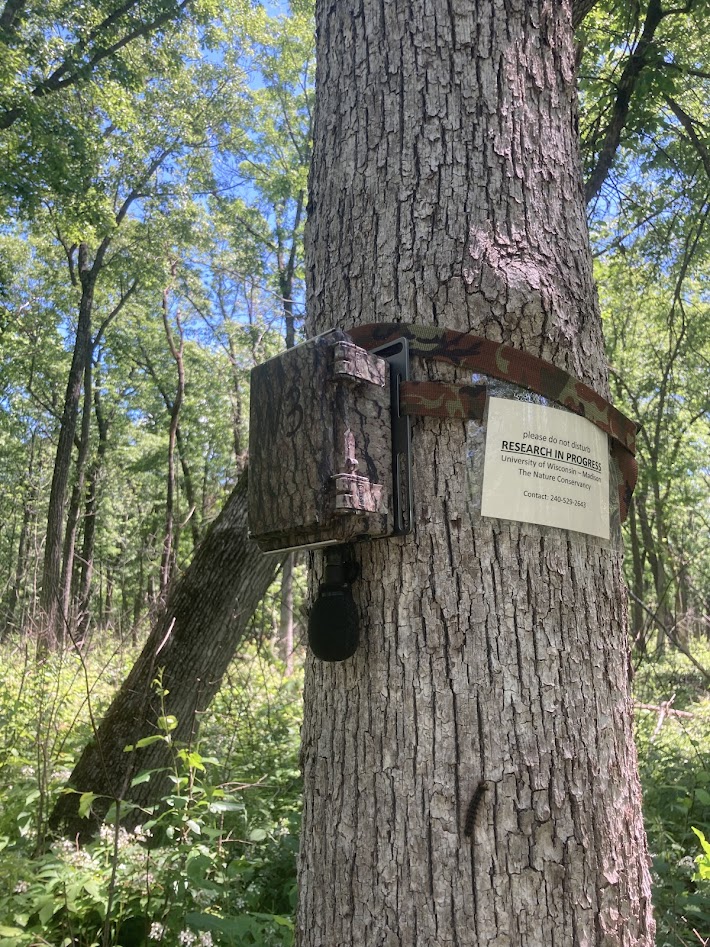
What does a healthy Wisconsin forest sound like? Since 2021, we have been working with the Sound Forest Lab at the University of Wisconsin-Madison to learn about the soundscapes of Baraboo Hills forest habitats. Read our recent study about the ways that oak woodland management influences soundscapes – and what that tells us about biodiversity – here, or watch a recorded webinar about integrating bioacoustics and land management – here.
We are currently recording continuous year-long forest soundscapes throughout the Baraboo Hills as part of the Soundscape Baselines Project.
Insect Biomass and Phenology
Insects are fundamental to forest communities, and as widespread and enigmatic declines in insect abundance have been observed throughout many parts of the world, understanding insect distribution is crucial for conserving ecosystems. We monitor flying insect and foliage insect abundance and biomass during the spring and summer throughout a range of forest habitats in the Baraboo Hills.
Community science is transforming the way that we learn about ecology, and we are excited to be part of a continent-wide effort to monitor caterpillars and other leaf-dwelling invertebrates. Check out Caterpillars Count! for more information.
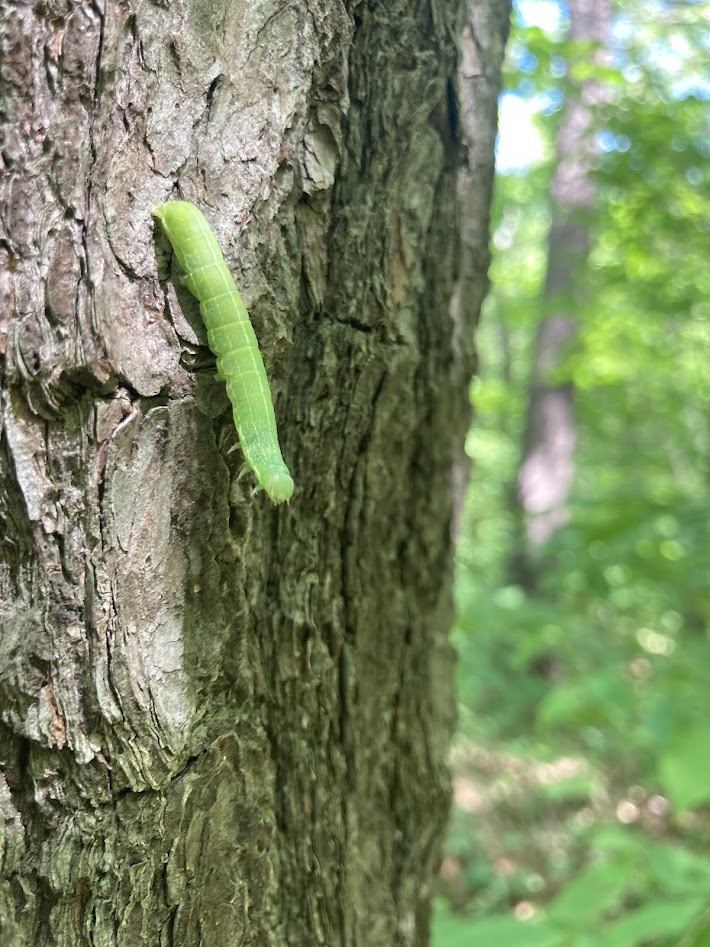
During May and June 2021, we recorded some of the highest caterpillar densities on record for the eastern US. You can read about this finding in the Caterpillars Count! project newsletter here.
Click here to make a donation!
 Baraboo Hills Ecology Research Collective